OpenAI’s Shift to for-Profit Model Stirs Debate on AI Innovation and Competition
OpenAI, the creator of ChatGPT, is reportedly considering transitioning to a for-profit model. This strategic pivot is reshaping the artificial intelligence (AI) landscape, raising questions about the future of AI innovation, market competition and partnerships in the tech world. The potential shift comes at a crucial time when AI technology is becoming integrated into consumer products and enterprise solutions. OpenAI’s new business approach will likely have significant implications for its relationships with key stakeholders, notably Apple and Microsoft, while also affecting its standing among potential rivals. Industry experts suggest this move could lead to tighter collaborations and deeper integrations with major platforms. “Already, deep integrations exist in place, while a new spotlight by OpenAI might directly align their capabilities further with these platforms,” John Russo, VP of healthcare solutions at OSP, told PYMNTS. “That would mean tighter collaboration in the expansion of AI applications across their ecosystems.” However, this alignment may present challenges, especially with companies known for strict privacy policies. Russo points out that Apple “may want strategic changes in the model to fit their strict guidelines.” Realignment in the Industry The recent partnership between OpenAI and Apple is particularly noteworthy in light of the shift to a for-profit model. “Its partnership with Apple, particularly integrating ChatGPT into iOS 18, is a game-changer, giving OpenAI unprecedented access to the consumer market,” Kaveh Vahdat, founder and CEO of RiseAngle, a generative AI game creation company, told PYMNTS. Meanwhile, Microsoft’s substantial investment in OpenAI positions it to reap significant benefits from this partnership. Vahdat notes, “Microsoft’s deep investment in OpenAI means they stand to gain significantly from this partnership, positioning themselves as key beneficiaries of the AI boom.” Balancing Act One of the most intriguing aspects of OpenAI’s new for-profit status is its potential impact on equity ties with rivals like Google, Meta and Amazon. Russo characterizes this as “the most delicate balancing act,” saying, “On the one hand, this could provide OpenAI with special access to resources, infrastructure, or talent that could move things faster for its innovation. It also brings a very real potential for conflict of interest, especially with how deeply invested these companies are in their own AI projects.” The move to a for-profit model may also intensify regulatory scrutiny. Vahdat said, “As regulatory scrutiny ramps up, particularly with inquiries from the FTC, the balance between cooperation and competition is delicate.” However, not all experts anticipate immediate conflicts. Yashin Manraj, CEO of Pvotal Technologies, offers a different perspective on these equity ties. “Due to AI’s rapid evolution and fear of oversight or new regulations, I believe it is unlikely that Google, Meta or Amazon will create any conflict or restrictions as long as the mutually beneficial relationship continues: OpenAI is still entirely dependent on their data centers, data, and infrastructure.”
AI Chatbots Could Become Cybercriminals’ Latest Weapon

Artificial intelligence (AI) chatbots, often heralded for their productivity benefits, now threaten cybersecurity as criminals harness them to create sophisticated malware. HP Wolf Security researchers have uncovered one of the first known instances where attackers used generative AI to write malicious code for distributing a remote access Trojan. This trend marks a shift in cybersecurity, democratizing the ability to create complex malware and potentially leading to a surge in cybercrime.
MSP at the forefront against credential stuffing

Credential stuffing has been around for a while, and it is exactly what it sounds like: an attack in which hackers use a cache of compromised usernames and passwords to break into a system. However, hackers have recently found new ways to make it more effective, namely the arrival of artificial intelligence (AI), which allows for a far more algorithmic-driven strategy. These types of attacks are on the rise because hackers have new AI-driven tools. The 2024 Verizon Data Breach Investigations Report (DBIR) states that external actors perpetrated 83 percent of breaches. Of these breaches, 49 percent involved the use of stolen credentials. Cybercriminals often find lists of usernames and passwords on the dark web or as a by-product of a previous cyber-attack. For example, www.HaveIBeenPwned.com has tracked over 8.5 billion compromised credentials from over 400 data breaches. Notable attacks Some notable, recent credential stuffing attacks include: Dunkin’: Dunkin’ and its customers were victims of many credential-stuffing attacks beginning in 2015. New York State sued the doughnut and coffee chain, and now Dunkin’ will be required to maintain safeguards to protect against similar attacks in the future. They will also have to follow incident response procedures when an attack occurs and pay $650,000 in penalties and costs to the state of New York. Norton: In January 2023, Norton Lifelock Password Manager was hit with a brute-force credential stuffing attack. Threat actors used stolen credentials to log into customer accounts and access their data. Over 925,000 people were targeted in this attack. Hot Topic: American retailer Hot Topic disclosed in March 2024 that two waves of credential stuffing attacks in November 2023 exposed affected customers’ personal information and partial payment data. The Hot Topic fast-fashion chain has over 10,000 employees in more than 630 store locations across the U.S. and Canada, the company’s headquarters, and two distribution centers. Roku: Roku warned in April 2024 that 576,000 accounts were hacked in new credential stuffing attacks after disclosing another incident that compromised 15,000 accounts in early March of 2024. The company said the attackers used login information stolen from other online platforms to breach as many active Roku accounts as possible in credential-stuffing attacks. These are just a handful of high-profile examples. Most credential-stuffing attacks occur outside of the media glare, day after day, in offices and enterprises worldwide. .
FTC Cracks Down On ‘Deceptive’ AI Businesses
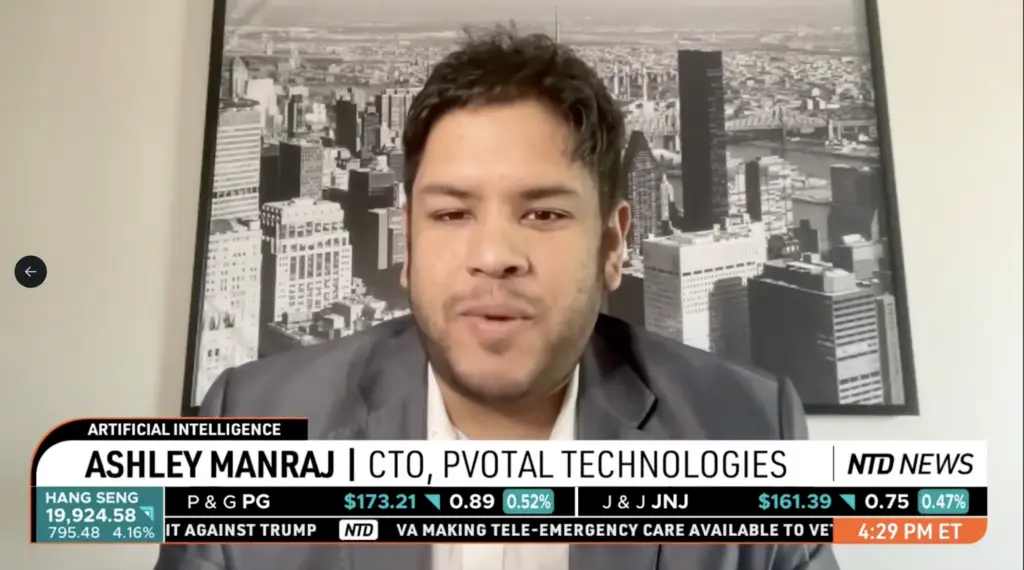
The Federal Trade Commission is cracking down on businesses that use deceptive artificial intelligence to lure in customers. In a new law enforcement sweep: operation AI comply. The FTC took action against companies it said used AI to trick, mislead, or defraud.
How will the Visa lawsuit affect businesses and customers?

The US Department of Justice's recent lawsuit against FinTech major Visa is part of a broader global trend aimed at curbing the dominance of financial and technology giants. It could potentially create more competitive markets and reduce barriers for new companies, while also addressing the rising debt-fee burden facing consumers.
Connecting your phone to rental car infotainment system? There is a big, hidden privacy risk

The recent data breach that exposed the sensitive information of some 300,000 Avis customers highlighted some critical vulnerabilities within the rental car industry. Yet, there’s another, often overlooked security risk when drivers use a rental car: the personal data you unknowingly leave behind when syncing your mobile device to a rental car’s infotainment system.
US proposal to ban Chinese software in connected vehicles could affect consumers

The US Commerce Department’s proposal on Monday to ban the sale of internet-connected vehicles with Chinese and Russian software and hardware on American roads could affect consumers and US car makers, possibly leading to higher prices.
TikTok faces tough questioning in court amid potential US ban

TikTok and its Beijing-based parent company, ByteDance, on Monday faced a tough line of questioning at a US appeals court while stating that a law which could force the company to sell its US operations or face a countrywide ban by January 19 would have a “staggering” effect on free speech.
Telegramin tulevaisuus: onko käyttäjien yksityisyys vaarassa Durovin pidätyksen jälkeen?

Telegramin tulevaisuus on näyttänyt vaikealta sen jälkeen, kun Telegramin perustaja ja toimitusjohtaja Pavel Durov pidätettiin sunnuntaina 25. elokuuta hänen yksityiskoneensa laskeuduttua Ranskaan. Uutinen Durovin pidätyksestä levisi nopeasti ja herätti paljon keskustelua teknologiasektorilla, sosiaalisessa mediassa ja viestintäsovellusten käyttäjien keskuudessa.
US Puts Big Bounty Bullseye on Russian Hackers

As cyberattacks persist to stir turmoil in geopolitical conflicts around the world, the United States amped up the volume as it calls out criminal cyberactivity suspected to come out of Russia. Now, it has indicted six Russian hackers involved in cyberattacks collectively known as “Whisper Gate.”